
Mammal Collection
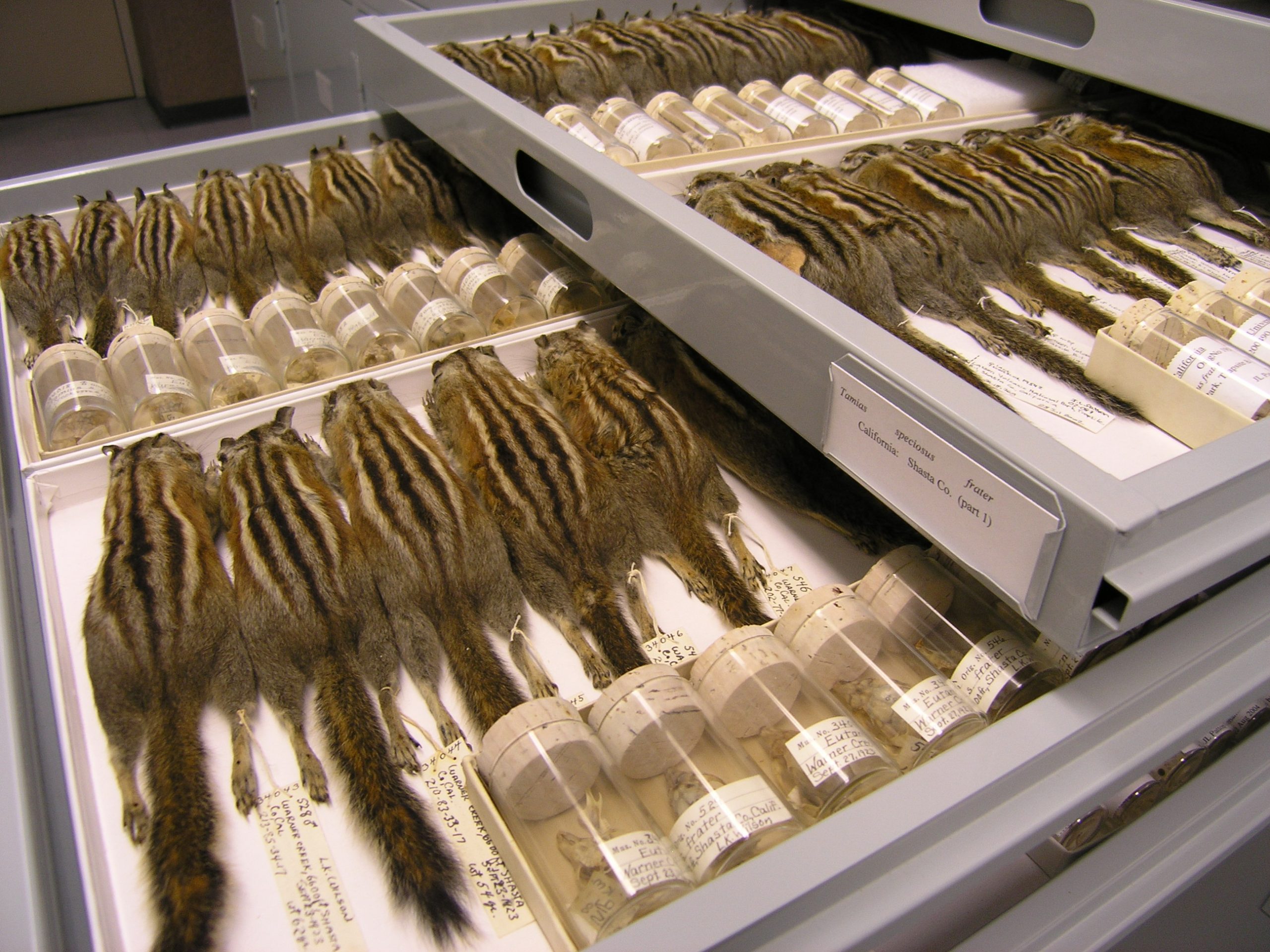
The MVZ mammal collection is one of the largest in the United States, especially associated with an academic institution. It contains over 245,000 skin, skull, skeleton and fluid-preserved specimens. Over 35,000 are represented also by frozen or fluid preserved tissues in the MVZ Tissue Collection. The collection includes 364 type specimens, making it the fourth largest collection of such specimens in the US. Specimens are acquired through the collecting activities of MVZ biologists, as well as through donations from a variety of sources, including state and federal agencies and local conservation organizations. Our oldest specimens date to circa 1858 and include material collected by Theodore Roosevelt.
The collection is synoptic in coverage. It includes representatives of 25 of the 26 currently recognized orders of mammals, nearly 60% of mammalian families, and more than 50% of mammalian genera. Rodents and bats are especially well-represented, with large series of individuals for multiple taxa. Geographic coverage is worldwide, with emphasis on western North America, specifically the continental US, Alaska, western Canada, and northwestern Mexico. Also present are large and significant collections from Central America, South America, Southeast Asia, and Australasia.
Karyotype (chromosome) preparations are available for ca. 4,000 rodent specimens. These consist of slides of chromosome preparations and, in some cases, black and white photos and/or 35 mm negatives of chromosome spreads. The mammal collection also houses large series of lab-raised specimens from research by F. B. Sumner, R. D. Sage, W. Z. Lidicker, and Michael Nachman.
Common uses of the collections include morphological and genetic studies of mammalian systematics, phylogeography, and evolution. Specimens in the collection have served as the basis for studies of epidemiology, parasitology, paleontology, and zooarchaeology, as well as stable isotope studies of ecology and environmental toxicology. We encourage researchers to visit the MVZ to make use of our mammal collections. Under appropriate circumstances, we also make loans of specimens to investigators at other institutions. Investigators interested in specimen loans should review the Loan Policy and contact the Staff Curator and all three Faculty Curators by email.